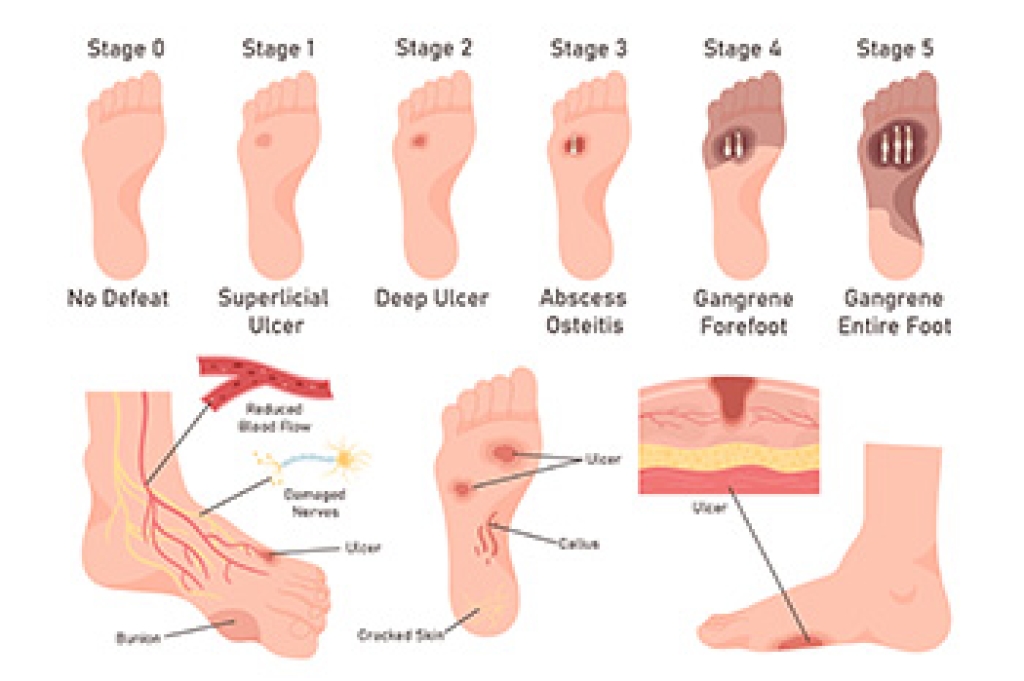
How Diabetes Affects the Feet

Diabetes can have a significant impact on foot health due to poor circulation and nerve damage. High blood sugar levels over time can lead to diabetic neuropathy, a condition that affects the nerves, particularly in the feet. This nerve damage may cause a loss of feeling, making it difficult to detect injuries, blisters, or infections. Reduced blood flow can also slow the healing process making minor foot problems more serious. People with diabetes are at a higher risk of developing foot ulcers, infections, and other complications. Dry skin, fungal infections, and poor wound healing are common concerns. To manage foot health, individuals with diabetes should regularly check their feet for any signs of damage, wear well-fitted shoes, and maintain proper foot hygiene. If you have diabetes, it is strongly suggested that you schedule regular visits to a podiatrist who can help you to manage this serious condition.

Diabetic foot care is important in preventing foot ailments such as ulcers. If you are suffering from diabetes or have any other concerns about your feet, contact Neeta Hasmukh, DPM from Total Podiatry. Our doctor can provide the care you need to keep you pain-free and on your feet.

Diabetic Foot Care

Diabetes affects millions of people every year. The condition can damage blood vessels in many parts of the body, especially the feet. Because of this, taking care of your feet is essential if you have diabetes, and having a podiatrist help monitor your foot health is highly recommended.

The Importance of Caring for Your Feet

  • Routinely inspect your feet for bruises or sores.
  • Wear socks that fit your feet comfortably.
  • Wear comfortable shoes that provide adequate support.

Patients with diabetes should have their doctor monitor their blood levels, as blood sugar levels play such a huge role in diabetic care. Monitoring these levels on a regular basis is highly advised.

It is always best to inform your healthcare professional of any concerns you may have regarding your feet, especially for diabetic patients. Early treatment and routine foot examinations are keys to maintaining proper health, especially because severe complications can arise if proper treatment is not applied.

If you have any questions, please feel free to contact our offices located in San Antonio, Uvalde, and Jourdanton, TX . We offer the newest diagnostic and treatment technologies for all your foot care needs.

Read more about How to Care for Diabetic Foot

What Is a Foot Corn?

Foot corns, also known as clavus, are thickened areas of skin that develop in response to friction and pressure. They commonly appear on the top or sides of the toes, as well as on the soles of the feet. The primary causes of corns include wearing ill-fitting shoes that rub against the feet, engaging in repetitive activities, and having abnormal foot mechanics. Symptoms typically include localized pain, tenderness, and a hard, raised bump on the skin. While corns are generally harmless, they can become uncomfortable and lead to further complications if not addressed. Preventive measures, such as choosing properly fitting footwear, can help reduce the risk of developing corns. If you have developed a corn that is uncomfortable or painful, it is suggested that you consult a podiatrist who can offer you effective relief and prevention tips.

If you have any concerns regarding your feet and ankles, contact Neeta Hasmukh, DPM of Total Podiatry. Our doctor will treat your foot and ankle needs.

Corns: What Are They? and How Do You Get Rid of Them?
Corns can be described as areas of the skin that have thickened to the point of becoming painful or irritating. They are often layers and layers of the skin that have become dry and rough, and are normally smaller than calluses.

Ways to Prevent Corns
There are many ways to get rid of painful corns such as wearing:

  • Well-fitting socks
  • Comfortable shoes that are not tight around your foot
  • Shoes that offer support

Treating Corns
Treatment of corns involves removing the dead skin that has built up in the specific area of the foot. Consult with Our doctor to determine the best treatment option for your case of corns.

If you have any questions, please feel free to contact our offices located in San Antonio, Uvalde, and Jourdanton, TX . We offer the newest diagnostic and treatment technologies for all your foot care needs.

Read more about Understanding Corns and Calluses

Treatment for Plantar Fasciitis

Plantar fasciitis causes heel pain due to inflammation of the plantar fascia, a thick band of tissue connecting the heel to the toes. This condition often affects those who are obese, pregnant, or on their feet frequently, including athletes and active workers. Symptoms include a stabbing pain at the bottom of the heel, usually worse in the morning or after prolonged rest. While plantar fasciitis can sometimes develop without specific triggers, factors such as improper footwear, high-impact activities, and prolonged standing can contribute to its onset. Diagnosis is typically based on medical history and physical examination. The condition can persist for several months if untreated, but rest and wearing supportive footwear can speed recovery. In chronic cases, options like orthotics, corticosteroid injections, and alternative therapies may be recommended to alleviate pain and promote healing. If you have developed plantar fasciitis, it is suggested that you schedule an appointment with a podiatrist for treatment.

Plantar fasciitis can be very painful and inconvenient. If you are experiencing heel pain or symptoms of plantar fasciitis, contact Neeta Hasmukh, DPM  from Total Podiatry. Our doctor can provide the care you need to keep you pain-free and on your feet.

What Is Plantar Fasciitis?

Plantar fasciitis is the inflammation of the thick band of tissue that runs along the bottom of your foot, known as the plantar fascia, and causes mild to severe heel pain.

What Causes Plantar Fasciitis?

  • Excessive running
  • Non-supportive shoes
  • Overpronation
  • Repeated stretching and tearing of the plantar fascia

How Can It Be Treated?

  • Conservative measures – anti-inflammatories, ice packs, stretching exercises, physical therapy, orthotic devices
  • Shockwave therapy – sound waves are sent to the affected area to facilitate healing and are usually used for chronic cases of plantar fasciitis
  • Surgery – usually only used as a last resort when all else fails. The plantar fascia can be surgically detached from the heel

While very treatable, plantar fasciitis is definitely not something that should be ignored. Especially in severe cases, speaking to your doctor right away is highly recommended to avoid complications and severe heel pain. Your podiatrist can work with you to provide the appropriate treatment options tailored to your condition.

If you have any questions, please feel free to contact our offices located in San Antonio, Uvalde, and Jourdanton, TX . We offer the newest diagnostic and treatment technologies for all your foot care needs.

Read more about Plantar Fasciitis

Risk Factors and Signs of Gout

Gout is a form of inflammatory arthritis characterized by sudden and debilitating pain, swelling, and redness in the joints, often affecting the big toe. This condition arises from elevated levels of uric acid in the blood, leading to the formation of urate crystals in the joints. Several risk factors can increase the likelihood of developing gout, including a diet high in purines, which are found in foods such as red meat, shellfish, and alcohol. Obesity, certain medical conditions like hypertension and diabetes, and a family history of gout also contribute to risk. Common signs of gout include intense joint pain, particularly during the night, and tenderness or discomfort in the affected area. If you have had one or more gout episodes, it is suggested that you are under the care of a podiatrist who can help you to manage this condition.

Gout is a foot condition that requires certain treatment and care. If you are seeking treatment, contact Neeta Hasmukh, DPM from Total Podiatry. Our doctor will treat your foot and ankle needs.

What Is Gout?

Gout is a type of arthritis caused by a buildup of uric acid in the bloodstream. It often develops in the foot, especially the big toe area, although it can manifest in other parts of the body as well. Gout can make walking and standing very painful and is especially common in diabetics and the obese.

People typically get gout because of a poor diet. Genetic predisposition is also a factor. The children of parents who have had gout frequently have a chance of developing it themselves.

Gout can easily be identified by redness and inflammation of the big toe and the surrounding areas of the foot. Other symptoms include extreme fatigue, joint pain, and running high fevers. Sometimes corticosteroid drugs can be prescribed to treat gout, but the best way to combat this disease is to get more exercise and eat a better diet.

If you have any questions, please feel free to contact our offices located in San Antonio, Uvalde, and Jourdanton, TX . We offer the newest diagnostic and treatment technologies for all your foot care needs.

Read more about Gout

Are You Suffering From Ingrown Toenails?

If left untreated, an ingrown toenail can lead to more serious concerns, such as an infection. Knowing proper nail care can help in the prevention of an ingrown toenail. Give us a call, and get treated!

Connect With Us

Advanced Podiatric Procedures & Services in the San Antonio, TX 78224 and Uvalde, TX 78801 areas